Why Wellness Has to Start Before the First Full Shift
National Wellness Month fits EMS because the work rewards stamina, judgment, and recovery. In Florida, future EMTs and paramedics often train while balancing jobs, family obligations, heat, long commutes, and course deadlines. The habits that protect a career rarely appear after graduation by accident. Students build them earlier through sleep discipline, food planning, realistic recovery, and honest stress management.
EMS attracts people who want useful work, direct responsibility, and a visible role during emergencies. That purpose can carry a student through hard labs and late study sessions, yet purpose alone cannot replace rest. The same person who studies airway skills at night may report to work early, skip breakfast, and treat fatigue as normal. A student may admire that grind for a semester, then feel the cost during exams, clinical preparation, or ride time. A sustainable career starts when that pattern becomes something to manage, not something to celebrate. The goal is not a softer EMS path; the goal is a provider who can keep performing after the early excitement fades.
Build Training Habits That Can Survive Field Work
Wellness habits matter before someone enters EMS because coursework, skills labs, ride time, and job schedules often collide. Students comparing an EMT training path or a paramedic course plan should think about sleep, nutrition, and recovery as part of readiness, not as separate personal goals.
Sleep Is a Clinical Skill, Not a Personal Luxury
Shift work changes the recovery equation
EMS schedules can disrupt the body before a provider notices the cost. Night calls, rotating shifts, overtime, and interrupted station sleep can shorten recovery and reduce alertness. Federal EMS fatigue guidance treats fatigue as an operational safety issue, not merely a personal weakness. That matters for students, because sleep habits affect driving, patient assessment, communication, and emotional control.
The hardest part for many new providers comes after the shift ends. A tired EMT may still need to drive home, complete errands, attend class, or care for family. Recovery can collapse when the sleeping room stays bright, noisy, warm, or full of phone alerts. An off-duty day can disappear into chores, second jobs, and catch-up studying. Good sleep planning starts before exhaustion arrives, not after a provider has already pushed too far.
A realistic sleep plan after hard shifts
A workable sleep plan should match the schedule a student actually lives. A night-shift provider may need blackout curtains, a cool room, and family expectations set in advance. A student with morning class after a late shift may need a safer transportation plan and a protected nap.
Caffeine deserves the same practical thinking. It can help alertness during selected work periods, but late use can damage the next sleep window. A provider who drinks caffeine near the end of a shift may feel functional during cleanup, then lose the recovery window at home. The better habit uses caffeine early enough to support performance without stealing the sleep that protects the next day.
Nutrition That Works From Classroom to Ambulance
Food choices in EMS often depend on timing rather than intention. Students and new providers may plan to eat well, then get pulled into a skills lab, long transport, or late call. Nutrition for EMS needs a backup plan, not a perfect meal plan.
Packable meals beat willpower
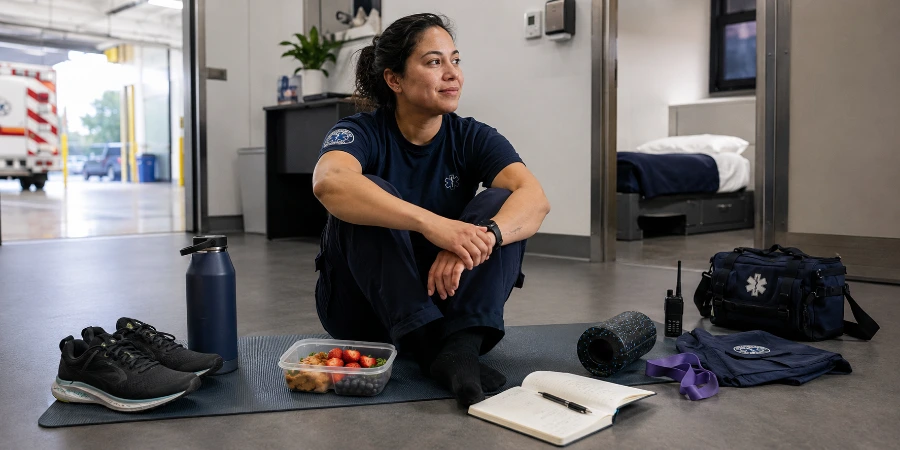
Packable food helps when the schedule turns messy. A useful shift bag might include protein, whole-grain carbohydrates, fruit, nuts, water, and something easy to eat between obligations. The goal is not gourmet preparation. The goal is avoiding the crash that follows missed meals, sugar-heavy snacks, and long gaps without fluids.
Florida heat adds another layer to the problem. Hydration becomes harder during ride-alongs, outdoor scenes, lifting, and traffic delays. A student who waits for thirst may already feel sluggish, distracted, or irritable. Sweaty uniforms, long parking-lot standbys, and warm ambulance bays can increase the need for planning. Better preparation puts water within reach and pairs hydration with meals, breaks, and post-shift recovery.
Hydration and caffeine need boundaries
Energy drinks can feel like part of EMS culture, especially around night work. The problem grows when caffeine becomes the only strategy for fatigue, missed meals, and poor recovery. A provider may feel temporarily sharper, yet sleep pressure still returns. Food, water, and adequate nutrition and rest must carry the foundation that caffeine cannot replace.
Recovery Between Calls, Classes, and Family Life
Recovery in EMS does not always look like a full day off. Many students move between class, clinical preparation, employment, and family responsibilities. Short recovery windows still count when they reduce strain. A five-minute reset, a quiet meal, or a post-call breathing routine can interrupt a day that otherwise runs without a pause.
Micro-recovery after difficult calls
Difficult calls can leave the body keyed up after the scene ends. A provider may feel restless, replay decisions, or carry tension into the next interaction. A quick reset cannot erase a hard experience, but it can help the nervous system step down before the next task. Walking away from noise, drinking water, loosening the shoulders, and taking a few slow breaths can create that shift. The habit works best when students practice it after simulations, not only after major calls.
Physical recovery matters as much as mental recovery. Patient movement, awkward lifting, and long periods sitting can leave students sore before they recognize the pattern. Basic mobility and smart lifting practice can prevent small problems from becoming career limits.
Mental Resilience Without the Tough-It-Out Trap
EMS culture often praises calm under pressure, and that skill matters. Calm does not mean silence about stress, sleep loss, or emotional strain. Healthcare work includes exposure to suffering, unpredictable schedules, hazardous conditions, and demanding physical work. Mental resilience grows when people name stress early and use practical supports before problems harden.
Naming stress before it hardens
A student may notice warning signs long before a crisis develops. Irritability, poor concentration, dread before class, withdrawal from friends, and constant exhaustion can all signal that the current rhythm needs adjustment. These signs do not mean someone lacks toughness. They mean the plan needs more support, fewer avoidable stressors, or a better recovery strategy. Good students address those signals before they affect patient care, coursework, or family life.
Peer check-ins can make that process more normal. A classmate, partner, instructor, or supervisor can notice changes that the student dismisses. The conversation does not need drama.
Professional habits protect emotional range
Long EMS careers require emotional range. Providers need enough empathy to treat people well and enough boundaries to keep functioning after hard scenes. That balance takes practice, and students should learn it alongside patient assessment and documentation. EMS Ricky in Fort Myers, Florida keeps staff current on wellness, fatigue, and resilience developments so students can connect course expectations with sustainable career habits. A provider who treats resilience as a skill can improve it through repetition, support, and reflection.
Career Longevity Starts With Early Boundaries
Career longevity begins with choices that feel ordinary. Students need time for sleep, meals, transportation, study, family, and recovery. A course plan that ignores those realities can create preventable strain. The best schedule on paper may still fail when it leaves no room for sleep after work.
Boundaries help students protect both performance and health. A student who works every available overtime slot may gain short-term income but lose study quality, patience, and recovery. Another student may say no to one extra shift before exams and perform better during labs. The stronger career move may look less dramatic in the moment. Over time, that restraint can support clearer decisions and a steadier professional reputation.
Sustainable Habit Map for EMS Students and New Providers
A habit map turns wellness into decisions a student can repeat. The table below connects common EMS stress points with practical habits that fit training and early field work. Each habit works best when the student chooses it before the pressure point arrives.
| EMS pressure point | Sustainable habit | Why it helps |
|---|---|---|
| Late shifts and early class | Set a protected sleep window before the week starts | Reduces last-minute recovery decisions |
| Missed meals during labs or ride time | Keep two shelf-stable food backups in the shift bag | Prevents long gaps without fuel |
| Difficult calls or intense scenarios | Use a brief reset before documentation or the next task | Reduces carryover into the next interaction |
| Overtime pressure | Decide the weekly limit before fatigue starts | Keeps income needs from controlling recovery |
| Exam week stress | Reduce nonessential commitments for several days | Protects attention and learning quality |
Making Wellness Part of Your EMS Training Plan
Wellness should sit inside the training plan, not outside it. Students comparing EMT program planning or a paramedic course pathway should look beyond course content and ask how the schedule fits work, transportation, sleep, and family responsibilities. A strong plan includes the application steps, the likely weekly workload, and the recovery time needed to stay sharp. That planning protects the student before the first stressful week arrives. A parent, firefighter, hospital worker, or volunteer provider may need a different rhythm, but every student needs a rhythm that can survive real life. The useful habit is the one that still works during a demanding week.
National Wellness Month gives future providers a clear reason to reset habits before the field demands more from them. Sleep, nutrition, recovery, and mental resilience do not compete with EMS ambition. They make that ambition more durable. The provider who learns those habits early has a better chance of staying useful, steady, and capable across the long arc of an EMS career.
FAQs
How much sleep should EMS students try to protect?
Most adults need a consistent sleep opportunity that supports alertness, learning, and recovery. EMS students should plan sleep around work, class, commuting, and family obligations before the week starts. A short nap may help during certain schedules, but it should not become the only recovery strategy.
What should EMT or paramedic students keep in a shift bag?
A useful shift bag should include water, simple protein, whole-grain snacks, fruit, and a shelf-stable backup meal. Students should choose foods they can eat quickly and tolerate during stress. The best setup reduces dependence on vending machines, gas stations, or skipped meals. Hydration should remain part of the plan during Florida heat, ride time, and outdoor work.
How can new EMS providers recover after stressful calls?
New providers can use short resets between tasks, such as water, quiet breathing, a quick walk, or a brief peer check-in. Persistent stress needs more support than a quick reset. A qualified clinician, supervisor, instructor, or employee assistance resource can help when stress affects sleep, relationships, concentration, or daily function.
Why does wellness matter before someone starts an EMS career?
Training already introduces pressure through exams, skills labs, clinical expectations, and scheduling demands. Early wellness habits help students learn under stress without relying only on adrenaline. Those habits can later support safer driving, clearer patient assessment, better communication, and longer career durability. Students who practice them early enter the field with a stronger foundation.

Lisa VanderMeulen brings over 15 years of field experience as a licensed paramedic and firefighter in Florida. She currently serves as a Lieutenant with the Lehigh Acres Fire Control & Rescue District and as Dean of Ricky Rescue Training Academy, where she oversees curriculum development for EMT and fire service education.
Lisa holds an Associate of Science in Emergency Medical Services Technology from Florida SouthWestern State College and advanced certifications from the Florida Bureau of Fire Standards & Training, including Fire Officer II, Fire Instructor II, and Incident Safety Officer. Her licensure as a paramedic is backed by the Florida Department of Health.
In addition to her teaching and command roles, she actively serves on safety committees, community outreach programs like Fire Prevention Week and Pink Heals, and holds leadership positions within IAFF Local 1826.