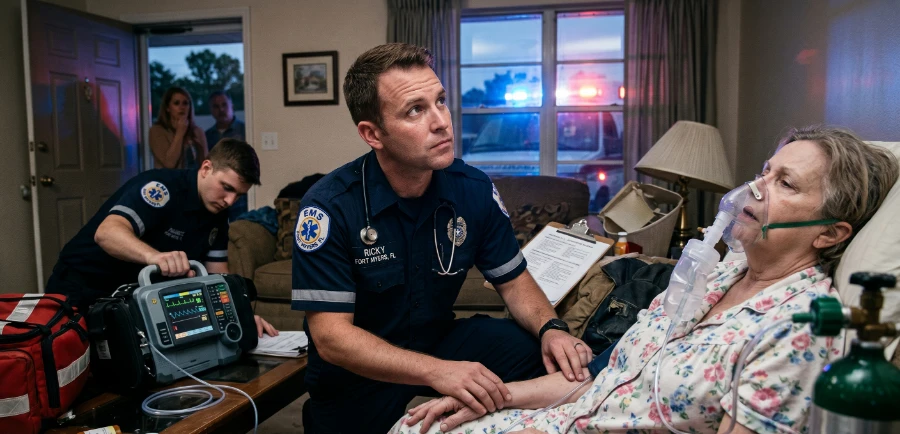
A clean protocol pathway can feel reassuring in the classroom, but real EMS calls often arrive with missing details, mixed symptoms, and pressure from every direction. That reality matters in Florida, where EMT and paramedic students must prepare for certification, field expectations, and patient encounters that rarely follow a perfect script. Strong clinical decision-making starts with protocols, then adds assessment discipline, communication, reassessment, and judgment inside the provider’s authorized scope.
For students researching EMS courses, this topic deserves attention before the first difficult clinical rotation or high-stress field internship. Florida recognizes EMT and paramedic certification pathways, and approved education remains part of that process. Classroom learning gives future providers the structure, but clinical judgment helps them apply that structure when the patient does not fit the obvious category.
Training Should Build More Than Protocol Recall
Clinical judgment develops when students practice assessment, scenario decisions, and reassessment under structured feedback. EMS Ricky’s paramedic training pathway connects advanced EMS coursework with the kind of reasoning students need for complex field presentations.
- Scenario work helps students recognize cues before choosing an intervention.
- Instructor feedback can sharpen reasoning instead of rewarding memorized steps only.
- Advanced EMS training should reinforce reassessment after every major decision.
Why protocols still matter
Protocols create a shared operating framework for prehospital care. They help providers act consistently, protect patients from random decision-making, and connect field care to medical oversight. The National EMS Scope of Practice Model frames EMS practice through education, certification, licensure, and medical-director credentialing. That point matters because “thinking beyond protocols” never means stepping outside authorized practice.
A useful protocol gives the provider a safe path, but it cannot replace patient assessment. A chest-pain patient may have a familiar complaint, yet age, medications, skin signs, vital-sign trends, and transport factors can change the risk picture. A respiratory patient may look anxious at first, then reveal worsening work of breathing after a few minutes of observation. The provider’s job involves applying the protocol while staying alert to what the patient actually shows.
What clinical judgment adds to the protocol
Clinical judgment gives EMS providers a structured way to decide what matters now. The National Registry describes clinical judgment as a process that includes clinical reasoning, decision-making, critical thinking, problem-solving, investigation, and synthesis in a medical situation. That framework appears in the Clinical Judgment Domain Sample Packet for AEMT and Paramedic candidates. The idea fits field care because EMS providers often make decisions before labs, imaging, or a complete history exist.
Recognizing cues
Cue recognition starts when the provider notices details that shape the working impression. The obvious cues may include the chief complaint, respiratory rate, blood pressure, mental status, and pain description. Subtler cues may come from medication bottles, family comments, home environment, skin signs, or a change during movement to the stretcher. Good providers avoid treating the first cue as the whole story.
Analyzing cues
Analysis means asking how the details fit together. A patient who says “I feel weak” may need evaluation for several possibilities, including infection, cardiac illness, medication effects, dehydration, or metabolic problems. A provider cannot diagnose every cause in the field, but the provider can identify threats, prioritize transport, and reassess carefully. The strongest decisions come from patterns that survive continued questioning, not from the first label that sounds plausible.
Advance From Assessment Basics to ALS Reasoning
Students who want to move beyond entry-level decision points should review how advanced training handles airway, medication, cardiac, and reassessment decisions. EMS Ricky’s advanced airway guidance shows how technical skills still depend on disciplined clinical judgment.
The new certification reality for advanced EMS candidates
The National Registry announced that updated AEMT and Paramedic certification examinations began on July 1, 2024, with a clinical judgment domain included in the testing model. That change signals a practical expectation for students. Advanced candidates need more than memorized steps; they need a repeatable way to recognize cues, analyze them, act, and evaluate the response.
At EMS Ricky in Fort Myers, Florida, staff stays current on developments related to clinical decision-making, including the National Registry’s increased focus on clinical judgment for advanced EMS candidates. That matters for students who want coursework to connect exam expectations with field habits. A strong learner should ask how scenarios, skills labs, and instructor feedback help build reasoning under pressure. Protocol knowledge still matters, but the testing and the field both reward providers who can think through a changing presentation.
How EMT-level thinking grows toward paramedic-level judgment
EMT training builds the base for assessment, stabilization, safe movement, communication, and transport decisions. Paramedic training adds higher-risk decisions involving advanced assessment, medication use, cardiac interpretation, airway considerations, and more complex reassessment. The National EMS Scope of Practice Model notes that some skills can look technically simple while still requiring considerable clinical judgment to determine whether they should occur. That statement captures the difference between doing a skill and knowing when that skill truly fits the patient.
More skills increase responsibility
Advanced interventions create more decision weight because the provider must consider timing, patient condition, risk, and response. A paramedic candidate cannot treat each skill as an isolated checklist. The provider has to ask whether the patient needs the intervention now, whether another threat deserves priority, and what change should appear after treatment. That habit develops through repeated scenarios and honest correction, not through memorization alone.
Field experience changes what providers notice
Experienced EMS providers often pick up patterns faster than new students, but speed alone does not make a decision strong. The provider also needs to notice when the pattern breaks. A familiar complaint can hide an unusual risk, and a common dispatch category can frame the crew’s thinking too early. Better judgment grows when the provider keeps the first impression flexible until reassessment supports it.
Fast thinking, slow thinking, and the unclear call
Paramedics often make decisions in dynamic environments with limited information, limited equipment, and time pressure. Research on paramedic decision-making describes both intuitive and analytical thought processes. Intuitive thinking helps a provider recognize familiar patterns quickly. Analytical thinking helps the provider slow down when the story, symptoms, or response does not fit.
Pattern recognition can help
Pattern recognition has real value during time-sensitive calls. A provider may see poor skin signs, altered mentation, respiratory distress, or a dangerous mechanism and quickly assign priority. That speed can help crews move, communicate, and treat without unnecessary delay. The key is keeping that early impression open to change.
Analytical thinking protects against tunnel vision
Analytical thinking becomes crucial when the call feels familiar but one detail refuses to fit. A young patient with anxiety-like symptoms still needs a careful medical screen. An intoxicated patient may also have trauma, hypoglycemia, or another medical problem. A weak older adult may need more than a lift assist if vital signs, history, or mental status raise concern.
Decision traps that catch even capable providers
Cognitive bias does not only affect careless clinicians. It affects humans working under time pressure, fatigue, incomplete information, emotional scenes, and team expectations. A 2025 scoping review identified cognitive biases relevant to prehospital critical-care decision-making, including anchoring, framing effect, availability bias, confirmation bias, overconfidence, premature closure, and omission bias. Those traps deserve attention during training because students often copy habits from the field before they can evaluate them.
Anchoring on the first story
Anchoring happens when a provider locks onto the first plausible explanation. A dispatch note, a family comment, or a familiar complaint can pull the provider toward one story before the assessment develops. The danger grows when the crew treats later findings as distractions instead of warnings. A simple defense starts with asking, “What finding does not fit?”
Confirmation bias after the first impression
Confirmation bias appears when the provider keeps collecting details that support the early impression while ignoring details that challenge it. A patient labeled as anxious may still show abnormal breathing effort, unusual vital signs, or a concerning medication history. The provider should keep looking for mismatches after the working impression forms. Reassessment gives the crew another chance to correct the direction before the decision closes.
Overconfidence after repeated calls
Repeated exposure can sharpen judgment, but it can also create overconfidence. A provider who has seen hundreds of similar complaints may move too quickly through a call that only appears routine. That risk becomes stronger during busy shifts, after frustrating calls, or when the scene pressures the crew to hurry. Strong providers use experience as a tool, not a substitute for assessment.
Before You Commit to Advanced EMS Training
Clinical judgment improves faster when students understand the expectations before coursework becomes intense. Review the practical details early, especially if paramedic training, ACLS readiness, or pediatric ALS exposure fits your next step.
- Confirm the documents and prerequisites needed before starting the process.
- Think about how your current field experience supports advanced scenarios.
- Plan time for skills practice, cognitive review, and instructor feedback.
EMS Ricky outlines the next steps on its application process page for students comparing training options.
Mental health calls show why mechanical thinking falls short
Mental health presentations often test communication, safety awareness, medical screening, consultation, and role clarity. A patient may present with emotional distress, substance use, medical symptoms, family conflict, or unclear capacity concerns. Research on paramedic decision-making in mental health presentations found that these calls can involve assessment, experience, standard procedures, documents, and consultation with other healthcare providers. Those calls can demand careful judgment even when they do not look like classic high-acuity emergencies.
Training should treat these calls as serious clinical decision-making scenarios. Students need practice asking clear questions, watching for medical causes, recognizing safety concerns, and using consultation when the situation requires it. A protocol may guide the response, but the provider still has to manage a human scene with incomplete information. Good judgment in these encounters often shows through calm communication and disciplined reassessment.
Building stronger judgment before the field builds shortcuts
Students often compare EMS courses by schedule, cost, location, and eligibility requirements. Those practical details matter, but the deeper question concerns what habits the course builds. A strong course should help students connect patient assessment, skills performance, scenario decisions, and feedback. That combination gives future providers a better chance of entering the field with disciplined habits instead of shortcuts.
Scenario practice should test priorities
Scenario work should ask more than, “Can the student perform the step?” It should also ask whether the student noticed deterioration, chose the right priority, communicated clearly, and changed course when new information appeared. A scenario that never changes teaches a sequence. A scenario that changes teaches judgment.
Feedback should correct thinking
Students need feedback on how they interpreted the patient, not only whether they completed a skill. An instructor can ask why a student chose a treatment path, what finding changed the level of concern, or what the crew should reassess after intervention. That kind of feedback builds clinical discipline. It also helps students understand that confidence without reflection can become risky.
Medical direction belongs in the decision process
Medical direction should not signal weakness. It belongs in EMS decision-making when a case falls outside routine pathways, when refusal risk becomes complicated, or when a protocol requires consultation. The National EMS Scope of Practice Model places medical-director credentialing inside the structure of EMS practice. Providers show maturity when they know when to use that structure.
FAQ: Clinical decision-making in EMS training
Does thinking beyond protocols mean ignoring protocols?
No. It means using protocols correctly while still assessing the whole patient. EMS providers must stay within education, certification, licensure, credentialing, local protocol, and medical direction. Clinical judgment helps the provider decide how the authorized pathway fits the patient’s actual presentation.
Why does clinical judgment matter for paramedic students?
Paramedic students handle more complex assessment and higher-risk decisions than entry-level providers. The National Registry’s updated AEMT and Paramedic examinations include clinical judgment as a formal domain. Students who practice cue recognition, analysis, action, and reassessment prepare more realistically for both testing and field care.
Can an EMT develop clinical judgment before paramedic school?
Yes. EMTs can build judgment by taking assessments seriously, following reassessment habits, asking better questions, and reviewing calls with experienced providers. EMT-level care still requires decisions about risk, priority, transport, and communication. Those habits create a stronger foundation for future paramedic training.
What is the most practical way to avoid tunnel vision on calls?
The provider should look for findings that do not fit the first impression. Serial vital signs, mental-status checks, medication clues, and treatment response can all challenge an early assumption. A simple habit helps: before closing the decision, ask what dangerous problem would be easiest to miss.

Jeromy VanderMeulen is a seasoned fire service leader with over two decades of experience in emergency response, training, and public safety management. He currently serves as Battalion Chief at the Lehigh Acres Fire Control & Rescue District and is CEO of the Ricky Rescue Training Academy, a premier provider of online and blended EMT and firefighter certification programs in Florida.
Jeromy holds multiple degrees from Edison State College and the Community College of the Air Force, and is pursuing his MBA at Barry University. He maintains top-tier certifications, including Fire Officer IV, Fire Instructor III, and Fire Inspector II, and has served as a subject matter expert for a court case. He is a member or the Florida Fire Chiefs Association.
Jeromy also contributes to state-level fire safety regulation and serves on several hiring and promotional boards.