Lessons From the Best Partners: What Makes an EMS Team Work
Why EMS Partnership Skills Matter Before the First Call
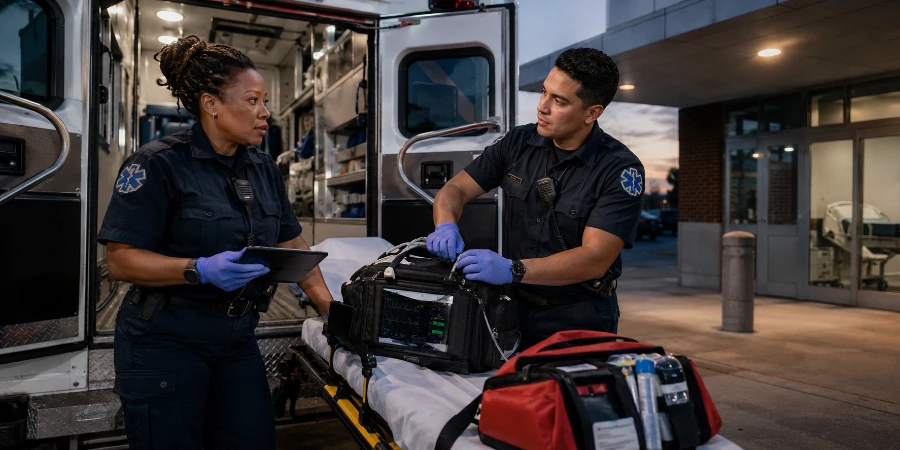
Good EMS teams rarely look dramatic from the outside. In Florida, future EMT and paramedic students often notice the same pattern during ride-alongs: the best partners stay calm, speak plainly, and seem to know what the other person needs before anyone asks. That rhythm does not come from luck. It grows from repeated habits around communication, role clarity, mutual support, and honest correction. Students can start noticing it long before they hold a license.
EMS work places two providers in a small, mobile workspace, yet the call can quickly involve firefighters, law enforcement, nurses, physicians, family members, and bystanders. Ambulance teamwork therefore requires a stable core partnership that can expand into a larger care team. The strongest partners do not simply like each other. They build a working system that holds up when a patient deteriorates, a scene gets loud, or a handoff needs precision.
Teamwork Starts Before the Ambulance Bay
Partnership habits start forming during training, not after the first difficult shift. Students comparing EMS pathways can use the EMT program and paramedic course options to connect classroom practice with the communication demands described in this article.
- Scenario practice helps students build direct task requests.
- Skills labs create space for role clarity and correction.
- Ride-along preparation supports better field awareness.
Communication That Keeps the Scene Organized
Strong partners use short, specific communication before the call becomes complicated. A vague comment like “grab that” forces the other person to guess. Clearer requests identify the item, the purpose, and the timing. Good EMS communication often sounds simple because it removes unnecessary choices during pressure.
Closed-loop language
Closed-loop communication helps a team confirm that a message was heard and acted on. One partner gives a direct request, the other repeats the task, and the first confirms or corrects it. This habit matters during airway care, medication preparation, movement, radio updates, and handoff planning. It also protects the team from silent misunderstanding when sirens, family questions, or scene noise compete for attention.
Structured handoffs and radio reports
The TeamSTEPPS framework identifies communication as a core teamwork skill, and structured tools give crews a shared order for important details. A format such as situation, background, assessment, and recommendation helps a provider move from the patient’s current problem to the action needed. That structure becomes useful when an emergency department needs a concise report before arrival. It also helps students learn that a good handoff tells the next clinician what matters most, not everything that happened. The receiving team needs the clearest version of the patient’s story.
Turn Team Habits Into Training Habits
Students who want stronger partner communication should also understand the practical steps before enrollment, documentation, and course planning. EMS Ricky’s application process page gives future students a clearer path before training starts.
Use this table as a practical bridge between the article’s teamwork concepts and student practice. It gives future EMS providers a quick way to connect partner habits with field behavior and scenario-based training.
| Team habit | What it looks like on a call | Why it matters | Student practice method |
|---|---|---|---|
| Closed-loop communication | One provider gives a direct request, the partner repeats it, and completion gets confirmed. | It reduces guessing during noisy, fast-moving, or high-stress patient care. | Practice task requests during airway, bleeding control, movement, and handoff scenarios. |
| Role clarity | Partners decide who leads assessment, gathers equipment, documents, or manages radio traffic. | It prevents duplicated effort and missed tasks when several priorities compete. | Assign roles before every simulated call, then switch roles during repeat runs. |
| Mutual support | A provider notices partner overload and steps in before a request becomes urgent. | It keeps patient care, movement, safety, and documentation from separating into silos. | Add workload changes to scenarios and require students to verbalize when help is needed. |
| Accountability | A partner corrects an unclear update, missed reassessment, loose strap, or safety concern. | It catches small errors before they become patient care or crew safety problems. | Use debriefs that name one specific correction and one next behavior. |
| Conflict repair | The crew addresses tension after the call and agrees on the next adjustment. | It prevents frustration from affecting the next patient interaction or partner decision. | Run short post-scenario debriefs using “what worked, what changed, what next.” |
Trust: The Difference Between Familiarity and Reliability
Trust in EMS does not mean blind agreement or casual friendship. A partner earns trust by completing tasks, staying aware, speaking up, and backing up the other provider when workload increases. Familiarity can help, but reliability matters more than comfort. A crew that gets along socially can still struggle if one person freelances or avoids uncomfortable communication.
A published model of EMS teamwork processes reinforces a practical idea: reliable partners make the other provider’s job more predictable. They check equipment before the call, clarify roles during the response, and notice when patient care starts pulling attention away from scene safety. They also avoid forcing the other person to monitor both the patient and the partnership. That kind of predictability lowers friction during calls that already carry enough stress. That discipline leaves more attention for the patient and the scene.
Shared Expectations on Shift
The best crews often set expectations before the first patient contact. They talk through who usually leads assessment, who prepares equipment, who manages documentation, and how they prefer to handle disagreements. This conversation does not need to feel formal. It gives both partners a map before stress starts making small assumptions expensive.
Role clarity before the patient
Role clarity becomes especially important when multiple agencies arrive together. One provider may need to focus on patient assessment while another manages equipment, family questions, movement planning, or radio traffic. Crews that clarify roles early can adjust faster when the call changes. The goal is not rigid control; it is shared awareness. Everyone should know who owns the next critical task.
What good partners confirm
Partners should confirm priorities during moments that can drift. They may review the chief complaint, treatment plan, transport decision, safety concern, or handoff message. A quick confirmation can reveal that two providers see the call differently. Catching that difference early gives the team time to correct course before it affects patient care.
Accountability Without Ego
Accountability in a strong EMS partnership starts with small corrections. A partner may point out a missing glove change, a loose strap, an unclear radio update, or an incomplete reassessment. The correction should stay direct, practical, and tied to the task. Personal criticism turns a fixable issue into a relationship problem. The point is faster crew alignment, not public embarrassment during care.
Good partners also accept correction without performing defensiveness. EMS scenes move too quickly for every adjustment to become a debate. A provider can ask for clarification after the call, but the immediate priority remains safe care. Teams improve faster when both people understand that correction protects the patient, the crew, and the next clinician who receives the handoff.
Conflict Management in a Two-Person Workspace
Conflict carries extra weight in EMS because the crew shares a vehicle, a patient compartment, and repeated high-pressure calls. Avoiding every disagreement does not create a healthy team. Silent resentment often turns into sarcasm, withdrawal, or poor backup during the next stressful moment. Effective partners deal with tension early, before it becomes the hidden soundtrack of the shift.
Tension during calls
During a call, conflict management should stay brief and patient-centered. A partner can use direct language such as “I’m concerned about that airway plan” or “I need you on traffic safety right now.” That wording identifies the problem without attacking the person. Strong crews save deeper discussion for after the patient no longer depends on their immediate coordination.
Repair after calls
After a difficult call, a short debrief can prevent the same friction from repeating. The best debriefs ask what went well, what changed, what got missed, and what the crew should handle differently next time. A partner who owns a mistake sets the tone for honest improvement. Blame usually shuts down the conversation before the useful lesson appears. Shared ownership helps crews reset before the next response.
Training Habits Florida Students Can Build Now
Future EMS students can practice partner skills before they enter the field. They can rehearse concise patient updates, direct task requests, repeat-back instructions, and calm corrections during scenarios. They can also practice noticing workload changes, such as when one partner gets pulled into documentation while the other needs help with patient movement. These habits make classroom learning feel closer to actual calls. Repetition also makes clear speech easier during stressful moments.
At EMS Ricky in Fort Myers, Florida, staff stay current on developments related to teamwork, scenario practice, and field readiness so students can connect course material with real EMS expectations. Students comparing EMT or paramedic training should look for practice that includes communication, not only isolated technical skills. A scenario that includes family questions, unclear symptoms, equipment delays, or a changing patient teaches more than a perfect checklist. Those messy details show whether a student can think, speak, and adjust with a partner.
Scenario practice
Scenario practice should include more than clinical steps. One student can lead assessment while another handles equipment, scene updates, or transport preparation. Instructors can interrupt with new information, a noisy bystander, or a safety concern. That kind of practice helps students understand that teamwork is a clinical skill, not a personality trait. The scenario should make the team communicate, not merely perform.
Debriefing
Debriefing turns practice into learning when it stays specific. Students should identify one communication habit that worked and one moment where the team lost clarity. They should also name the next behavior they will try, such as earlier role assignment or clearer handoff sequencing. Progress becomes easier to measure when feedback describes actions rather than attitudes.
The Standard Great Partners Keep
Great EMS partners bring steadiness to unpredictable calls. They communicate early, confirm shared expectations, correct problems without ego, and repair conflict before it affects the next patient. They understand that teamwork does not replace clinical knowledge. It turns that knowledge into coordinated care when time, stress, and incomplete information make everything harder.
Students who want long EMS careers should take partnership skills seriously from the start. The provider who can listen, speak clearly, accept correction, and support another clinician becomes easier to trust on hard calls. Those habits also make the ambulance a safer place to learn and work. A strong team does not happen by accident; it grows through repeated choices that partners make every shift. The best partners keep making those choices even when no one is watching.
FAQ
What makes a good EMS partner?
A good EMS partner communicates clearly, follows through on assigned tasks, and notices when the other provider needs help. Strong partners also stay aware of scene safety, patient changes, and handoff priorities. They correct problems directly without turning every mistake into a personal issue.
Why does communication matter so much in EMS teamwork?
EMS calls often unfold with limited information, noise, time pressure, and several people competing for attention. Clear communication helps partners confirm priorities, reduce guessing, and coordinate care. Short updates, repeat-back instructions, and structured handoffs help crews stay aligned.
How should EMS partners handle conflict?
EMS partners should handle urgent conflict with direct, patient-centered language during the call. Deeper discussion belongs after the call, when both providers can review what happened. A useful debrief focuses on actions, missed cues, and the next adjustment.
Can EMT students practice teamwork before field experience?
EMT students can practice teamwork through scenarios, skills labs, role assignment, and structured debriefing. Partner communication improves when students rehearse short requests, repeat-back instructions, and clear handoffs. These habits help students enter ride-alongs and clinical experiences with stronger field awareness.

Jeromy VanderMeulen is a seasoned fire service leader with over two decades of experience in emergency response, training, and public safety management. He currently serves as Battalion Chief at the Lehigh Acres Fire Control & Rescue District and is CEO of the Ricky Rescue Training Academy, a premier provider of online and blended EMT and firefighter certification programs in Florida.
Jeromy holds multiple degrees from Edison State College and the Community College of the Air Force, and is pursuing his MBA at Barry University. He maintains top-tier certifications, including Fire Officer IV, Fire Instructor III, and Fire Inspector II, and has served as a subject matter expert for a court case. He is a member or the Florida Fire Chiefs Association.
Jeromy also contributes to state-level fire safety regulation and serves on several hiring and promotional boards.