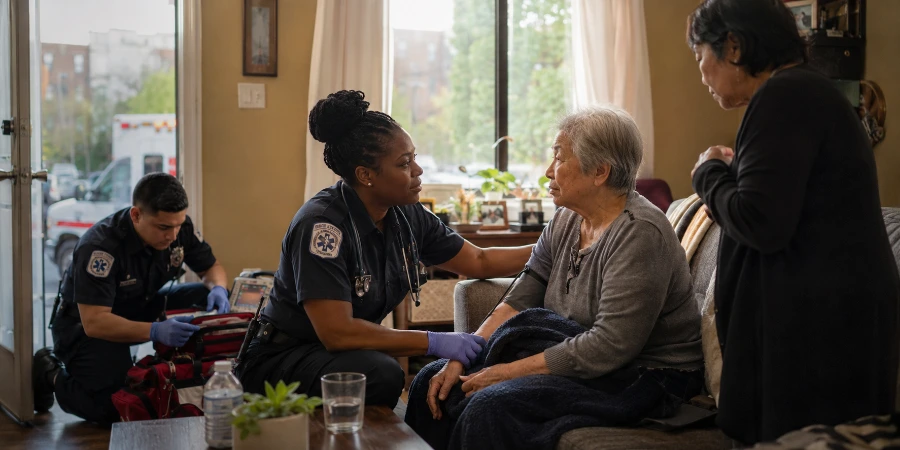
An EMS call can turn a normal day into a memory that lasts for years. In Florida, future EMTs and paramedics often train for scenes where heat, traffic, family stress, falls, chest pain, and sudden illness all collide at once. The patient may not remember every assessment step, but they often remember whether the crew made them feel safe, heard, and taken seriously. That memory starts before medication, transport, or hospital handoff.
AHRQ defines patient experience as the range of interactions patients have with healthcare, including communication, respect, access to information, and care that responds to patient needs. That definition matters in EMS because the patient experiences medical care through human contact. A technically correct call can still feel frightening if no one explains what is happening. A calm, organized crew can make a serious emergency feel less chaotic.
Patient Experience Starts in EMS Training
Strong patient communication develops through repeated practice, not just good intentions. EMS Ricky connects classroom concepts, skills labs, and field-readiness habits for students preparing for real patient contact.
- Practice calm introductions before assessment pressure rises.
- Build patient explanations into every skills station.
- Connect technical care with dignity, privacy, and trust.
Why the Call Feels Bigger Than the Medical Problem
A patient usually meets EMS at a vulnerable moment. They may feel exposed on a bathroom floor, embarrassed after a fall, short of breath in front of family, or frightened by chest pressure they cannot explain. Their body needs assessment, but their mind also needs orientation. The provider who explains the next step helps the patient feel less lost inside the event.
Patient experience differs from simple satisfaction. Satisfaction depends on what a person expected, but patient experience asks what actually happened during care. For EMS students, that distinction creates a practical lesson. Good care includes what the patient saw, heard, understood, and felt during the call.
Turn Patient Contact Into a Practiced Skill
Future providers should treat communication, privacy, and reassessment as trainable EMS skills. The EMT skills lab page shows how station-based practice supports stronger habits before real calls.
Clinical Skill Shows Through Human Behavior
Patients usually cannot judge every protocol decision while the call unfolds. They can see whether the crew enters with purpose, asks focused questions, checks symptoms carefully, and works without visible confusion. Clinical skill becomes visible through calm movement, organized assessment, and clear teamwork. The crew’s behavior often becomes the patient’s first clue that capable people have taken over.
Calm Assessment Makes Competence Visible
A strong assessment does more than collect information. It gives the patient a sense that someone has a plan. One provider may lead communication while another gathers vitals, prepares equipment, or checks the environment. The patient benefits when questions feel purposeful instead of scattered. That kind of scene control takes practice before real pressure arrives.
Students can build this habit during labs. They can speak to the patient while checking breathing, circulation, mental status, blood pressure, or skin signs. They can explain a blood sugar check in simple words. They can warn the patient before movement. Those small explanations keep technical care connected to the person receiving it.
Pain Response Becomes Part of the Patient’s Story
Pain shapes memory because it demands attention. A patient may remember whether EMS believed the complaint, asked for a number, reassessed it, and tried to reduce it within scope and protocol. NEMSQA includes reduced pain score among EMS patient-experience measures, which shows how closely comfort and care quality can connect. Pain care also includes positioning, splinting when appropriate, smoother movement, and clear warning before lifting.
The patient may not expect instant relief. They do expect the crew to notice pain and respond with seriousness. A simple reassessment after an intervention can change the tone of the call. “Is that position helping at all?” tells the patient the provider has not moved on mentally. Silence after a pain complaint can leave a stronger memory than the provider intends.
Building Trust in the First Minute
EMS providers often have minutes, not weeks, to form a working relationship. A 2024 qualitative meta-synthesis of ambulance-care studies identified trust, communication, and dignity as central to the relationship between patients and ambulance clinicians. That finding fits the reality of the first minute on scene. The patient needs to know who has arrived, what they plan to do first, and whether anyone sees them as more than a problem to solve.
A clear introduction can change the emotional temperature. “My name is ____. We’re going to help you,” gives the patient a human point of contact. The words do not need drama or softness. They need steadiness. A provider who explains before touching, moving, or applying equipment gives the patient a small amount of control during an event that already feels out of control.
Confidence also needs restraint. A provider can sound calm without dismissing fear. A patient with chest discomfort, dizziness, weakness, or shortness of breath may ask the same question several times. Repeating a clear answer without irritation can matter as much as the first answer itself. The patient often remembers the tone longer than the exact wording.
Communication Under Stress
Good EMS communication does not mean constant talking. It means short, useful language that helps the patient understand what happens now, what happens next, and why a step matters. In the field, that can mean fewer surprises, less panic, and better information from the person who needs help.
Plain Language Beats Medical Performance
Medical vocabulary has a place, especially during handoff and documentation. Patients under stress often need simpler wording. “Heart tracing” may land better than “12-lead ECG” before the provider gives more detail. “Blood sugar check” may work better than “glucometer.” Plain language does not weaken clinical care; it helps the patient follow the care.
Students can practice this translation during every scenario. They can say what they are checking without reciting a textbook. They can explain stroke signs, breathing checks, bleeding control, or transport choices in words a frightened person can process. That habit matters during real calls, where the patient may hear only part of each sentence. Clear language gives them something solid to hold onto.
Families Need Direction, Not Debate
Family members can intensify a scene, but they often act from fear. A spouse may interrupt with medication details. A parent may repeat the same question. A friend may hover near the stretcher. The crew can reduce tension by assigning one clear task or giving one direct update.
A family member can gather medication bottles, move pets, clear a hallway, or prepare identification. That direction turns anxiety into useful action. The patient may also relax when they hear the crew speak calmly to loved ones. Family communication becomes part of patient care because the patient often watches every exchange.
Dignity in Vulnerable Moments
EMS enters private spaces at public moments. A patient may lie on a bedroom floor, sit in a wet bathroom, vomit in front of neighbors, or need clothing moved during assessment. Dignity can disappear quickly if the crew treats the person like a checklist. A provider protects dignity by covering the patient when possible, explaining exposure, and speaking directly to the person instead of only about them.
This habit also affects low-acuity and uncertain calls. A patient with anxiety, a fall without obvious injury, or vague weakness still deserves serious attention until assessment supports the next decision. Dismissive comments can stay with patients long after the crew leaves. Respectful language costs no time, and it can prevent embarrassment from becoming the strongest memory.
Non-Transport Calls Can Be the Calls Patients Question Later
Not every EMS encounter ends with a ride to the hospital. A patient who stays home may still need careful explanation and reassurance. Non-transport decisions can feel confusing to a patient or family member. They may hear “you are fine,” even when the provider never used those words.
Clear instructions reduce that risk. The crew should explain warning signs, follow-up needs, and when to call again according to local protocol and medical direction. The patient may forget the numbers from the assessment, but they may remember whether the decision made sense.
Small Actions That Stay With Patients
Small EMS actions can carry unusual weight during a frightening call. A blanket, a name, a warning before movement, or a clear sentence before applying equipment can become part of the patient’s memory. These actions do not replace assessment or treatment. They help the patient experience those steps as care instead of confusion.
| Small EMS action | Why patients remember it | Where students should practice it |
|---|---|---|
| Introducing yourself | It turns strangers into helpers | Opening assessment scenarios |
| Explaining before touch | It reduces fear and embarrassment | EMT skills labs |
| Naming the next step | It helps patients stay oriented | Medical and trauma stations |
| Rechecking pain | It shows the complaint matters | Reassessment drills |
| Protecting privacy | It preserves dignity | All simulated patient contact |
| Updating family briefly | It lowers scene anxiety | Team-based simulations |
Students Should Drill These Habits Early
A student who only practices silent skills may struggle to speak naturally on real calls. Scenario practice should include short patient explanations, family updates, privacy habits, and reassessment language. At EMS Ricky in Fort Myers, Florida, staff stays current on developments related to EMS patient experience, communication, and field training expectations. Students also benefit when scenario-based EMS training includes emotional pressure, not only correct medical steps.
What Future EMS Providers Should Carry Forward
Patients remember whether the crew helped them feel safer during a moment they did not choose. They remember tone, clarity, pain response, privacy, and whether someone seemed to understand their fear. They also remember when providers ignored those needs. The future EMT or paramedic should carry one simple lesson into class: technical readiness and human steadiness belong together.
A strong provider keeps learning both sides of the work. They drill assessment until it feels organized. They practice communication until it sounds natural. They treat dignity as part of care. They leave the patient with a memory of competence that felt human.
FAQ: What Future EMS Students Should Know About Patient Experience
Do patients remember clinical care or communication more?
Patients remember both, but they often experience clinical care through communication. A calm assessment, clear explanation, pain response, and respectful tone can make technical care feel safer. Strong EMS care does not separate medicine from human contact. Students should practice both during every scenario.
Why does trust matter so quickly in EMS?
The patient often meets EMS during fear, pain, embarrassment, or confusion. A clear introduction and steady first assessment can help the patient cooperate and understand what happens next. Trust grows through organized action, respectful words, and calm tone. The first minute can shape the rest of the encounter.
How can EMT students practice better patient communication?
Students can add patient-facing language to every skills station. They can explain before touch, name the next step, reassess pain out loud, and give short updates to family members. This practice should happen before clinical pressure rises. Natural communication develops through repetition, not improvisation alone.
What small EMS actions make the biggest difference to patients?
Patients often remember introductions, privacy, pain reassessment, and warnings before movement. They also remember whether the crew explained transport or non-transport decisions clearly. Brief family updates can reduce tension around the patient. Small actions matter most when the patient feels vulnerable.

Lisa VanderMeulen brings over 15 years of field experience as a licensed paramedic and firefighter in Florida. She currently serves as a Lieutenant with the Lehigh Acres Fire Control & Rescue District and as Dean of Ricky Rescue Training Academy, where she oversees curriculum development for EMT and fire service education.
Lisa holds an Associate of Science in Emergency Medical Services Technology from Florida SouthWestern State College and advanced certifications from the Florida Bureau of Fire Standards & Training, including Fire Officer II, Fire Instructor II, and Incident Safety Officer. Her licensure as a paramedic is backed by the Florida Department of Health.
In addition to her teaching and command roles, she actively serves on safety committees, community outreach programs like Fire Prevention Week and Pink Heals, and holds leadership positions within IAFF Local 1826.