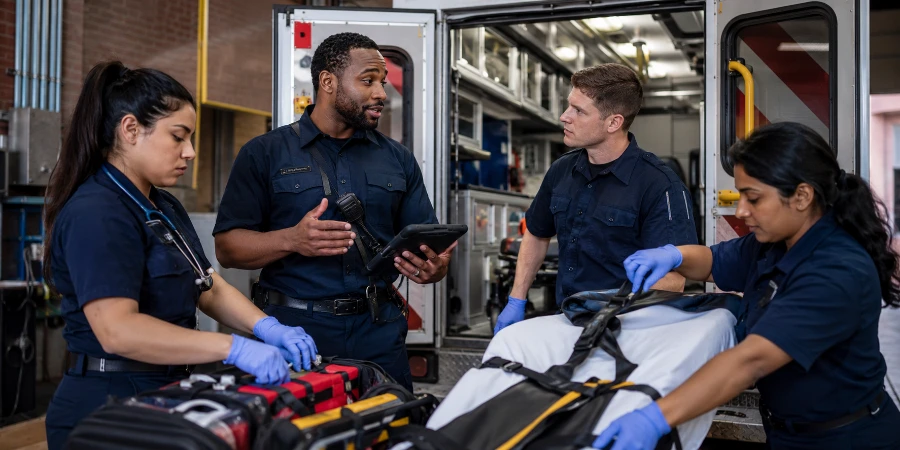
A strong EMS crew does not wait for a promotion before someone improves the call. In Florida, EMT and paramedic students enter a field where certification levels define scope, yet daily performance still depends on communication, awareness, preparation, and follow-through. The provider in the passenger seat, the driver, the student observer, or the newest EMT can shape how smoothly a scene runs. Rank may define authority, but influence grows from behavior that helps the crew make better decisions.
Crew Influence Starts Before the Patch Changes
Leadership habits begin during training, skills practice, ride-alongs, and early crew experience. Students comparing entry-level and advanced EMS paths can use the EMT program and paramedic pathway details to connect classroom preparation with field behavior.
- Entry-level students can practice preparation, awareness, and clear communication early.
- Working EMTs can build influence through reliable habits before promotion.
- Paramedic-track students can connect advanced care with stronger team coordination.
Why Leadership Without Rank Matters in EMS
Emergency scenes often move faster than formal hierarchy. One provider may handle patient contact, another may manage equipment, and another may watch traffic, family members, or hazards around the ambulance. Florida recognizes EMT and paramedic as the two prehospital certification levels, and students prepare for entry-level work through a national standard inside Florida-approved programs. That structure matters, but strong crews still need team members who notice what needs doing before someone asks. Leadership without rank means acting like a dependable teammate inside the role you already hold.
Turn Field Readiness Into a Training Plan
Readers who want stronger crew habits can start by matching their current role with the right course path. EMS Ricky’s course options help students and providers think beyond rank and build the skills that make crews more dependable.
What Any-Seat Influence Looks Like
Any-seat influence begins when a crew member improves the call without making themselves the center of attention. A newer EMT may spot a missing oxygen wrench before transport begins. A driver may position the unit so the stretcher has a safer path back from the residence. A student may help by staying alert, listening closely, and asking one useful question after the call.
When the Driver Leads
The driver influences scene safety before patient contact even begins. Unit placement can protect the crew, guide other responders, and preserve access for fire or law enforcement. A driver who communicates hazards early gives the patient-care provider more mental space for assessment. That kind of leadership rarely looks dramatic, yet it changes how safely everyone works.
When the Newer EMT Leads
A newer EMT can lead by staying organized when the senior provider feels pressure. That may mean staging the airway kit, documenting times accurately, or confirming that the stair chair has a clear path. The newer provider does not need to dominate the call. Calm usefulness often speaks louder than a long explanation.
How to Build Influence Before a Promotion
Crew influence develops through repeated small choices. Providers notice who checks the unit carefully, who keeps a steady tone, and who admits uncertainty before it creates risk. Building influence also requires consistency across routine calls, not only dramatic scenes. The teammate who handles a lift assist with care often shows the same habits during a respiratory emergency. A promotion may come later, but the pattern starts much earlier.
Be Early With the Small Things
Preparation gives informal leadership a practical form. A provider who checks suction, restocks gloves, confirms radio function, and reviews the next destination removes avoidable delays. The work looks ordinary, but crews remember who makes the next call easier. Those habits also reduce the need for rushed fixes after the patient already needs movement or treatment.
Speak Up Before a Problem Becomes Noise
EMS culture needs providers who can raise concerns without turning every concern into conflict. A simple phrase such as “I see one issue with that path” can prevent confusion during movement. Direct language works best when it names the problem and offers a fix. The goal is not to win an argument; the goal is to keep the crew aligned under pressure.
Own Your Weak Spots
Confidence grows when a provider knows their limits. A student who says, “I need another repetition on radio reports,” gives an instructor something useful to coach. A working EMT who reviews a weak assessment pattern after a call shows maturity. Crew members tend to respect honest improvement more than forced certainty.
Mentoring Without Acting Like a Supervisor
Mentoring in EMS often happens between calls, during cleanup, or while checking the truck. A provider does not need a field training title to help a newer teammate understand practical habits. Good mentoring avoids lectures and focuses on one point the other person can use on the next shift. It also respects timing, especially after difficult calls where privacy and emotional control matter.
Make Coaching Short and Specific
Useful coaching sounds concrete. “Put your gloves on before you touch the monitor bag” helps more than “be more prepared.” “Give the hospital age, complaint, mental status, and vitals first” helps more than “clean up your report.” Specific feedback gives the newer provider a target they can practice, which matters during early field development.
Protect the New Provider’s Confidence
A newer provider often needs correction and reassurance on the same shift. Public embarrassment rarely improves performance, especially when the call already felt stressful. Private, clear coaching helps the person keep learning without shutting down. The better mentor protects the lesson without making the person feel smaller.
The Teamwork Skills Behind Informal Leadership
Healthcare teamwork has a teachable structure, not just a personality component. TeamSTEPPS organizes high-performing care teams around communication, team leadership, situation monitoring, and mutual support. Those four skills fit EMS because the field environment changes quickly and crews often work with people they do not know well. Informal leadership grows when a provider practices those skills before anyone hands them a title.
The table below gives EMS students and newer providers a practical way to connect informal leadership with visible crew behavior. It belongs directly after this teamwork section because it turns the core concepts into scene-level actions before the article moves into initiative.
| Teamwork skill | Any-seat leadership behavior | Scene example | What it prevents |
|---|---|---|---|
| Communication | Use clear, brief updates before confusion spreads. | “Patient is dizzy when standing; let’s move slower.” | Rushed movement and missed condition changes. |
| Team leadership | Clarify roles without taking control away from the lead provider. | “I can get vitals while you talk with family.” | Duplicated tasks and idle hands. |
| Situation monitoring | Track patient, environment, equipment, and crew position together. | Watch the stairs, dog, oxygen tubing, and patient color during movement. | Tunnel vision during task-heavy moments. |
| Mutual support | Offer help early and accept correction without drama. | “I’ll take the stair chair straps if you handle the monitor.” | Fatigue, missed steps, and silent frustration. |
Taking Initiative Without Taking Over
Initiative can help or hurt, depending on timing and scope. Helpful initiative closes a gap the crew already needs closed. Unhelpful initiative creates a second plan before the first plan fails. EMS providers can avoid that problem by naming what they are about to do and leaving room for correction. A phrase like “I’ll start gathering medications unless you need me on vitals” keeps the lead provider informed.
Read the Scene, Then Fill the Gap
The best gap may not look clinical. A confused spouse may need one calm sentence about where the crew is taking the patient. A hallway may need clearing before the stretcher moves. A medication list may need collecting before the patient reaches the ambulance.
Use Clear Language Under Pressure
Stress rewards simple words. “Stop movement,” “I need help,” and “Repeat that order” carry more value than vague hints. Clear phrases reduce the chance that another provider guesses wrong. The crew also hears the message faster when the words stay short and concrete.
The Teammate Everyone Wants on Scene
The teammate everyone wants is rarely the loudest person on scene. Crews value the provider who stays useful when the call becomes awkward, slow, messy, or emotionally heavy. That person anticipates the next practical need without acting annoyed when plans change. They clean equipment without being asked, write legible notes, and treat routine patients with the same respect they bring to high-acuity calls. Over time, those habits make partners more willing to listen when that provider speaks up.
Calm Presence Beats Loud Authority
A calm provider lowers the temperature of a scene. Patients and family members often mirror the tone they hear from responders. A steady voice, direct eye contact, and organized movement can help the crew regain control without force. Calm does not mean slow; it means deliberate.
Good Follow-Up Extends the Call
Leadership continues after the stretcher leaves the hospital bay. A quick cleanup, equipment check, and honest call review prepare the crew for the next patient. A provider who owns that reset helps the whole shift recover faster. The next call starts better when the previous call ends cleanly.
A Practical Path for Florida EMS Students
EMS students can start practicing leadership before they earn seniority. They can study protocols carefully, ask instructors for direct feedback, and treat every lab repetition as a chance to build crew habits. At EMS Ricky in Fort Myers, Florida, staff stay current on EMS education and teamwork developments so students can connect course learning with the expectations they will face around real crews. The bigger goal is not to sound like a supervisor; it is to become the provider others can count on when the call gets complicated.
The national direction for EMS also points toward people-centered care. EMS Agenda 2050 describes a vision that calls for EMS to become more integrated, evidence-based, data-driven, and centered on the people served and the people who serve. Any-seat leadership fits that direction because it asks every provider to improve the system from their actual position. A student, EMT, or paramedic does not need a new patch to practice better communication, cleaner teamwork, and steadier initiative.
FAQ
Can a new EMT show leadership without looking arrogant?
Yes, a new EMT can lead by being useful, prepared, and receptive to correction. The safest approach is to offer help instead of giving orders. Crews usually respond well when a newer provider names a task, fills a real gap, and stays inside their role.
What is the difference between initiative and overstepping?
Initiative supports the crew’s plan, while overstepping creates a competing plan without authority or communication. A provider can avoid that mistake by announcing the task and asking for redirection when needed. Scope of practice, local protocol, and the lead provider’s plan still set the boundaries.
How can EMS students mentor classmates?
Students can mentor classmates by sharing practical study habits, practicing skills together, and giving specific feedback during labs. A useful comment focuses on one behavior the classmate can change. Personal criticism, sarcasm, or public correction usually damages learning instead of improving it.
Why does informal leadership matter during routine calls?
Routine calls build the habits crews rely on during complex calls. A provider who communicates clearly during a low-acuity transport will likely communicate better during a time-sensitive scene. The crew’s baseline habits often decide how smoothly the harder call begins.

Jeromy VanderMeulen is a seasoned fire service leader with over two decades of experience in emergency response, training, and public safety management. He currently serves as Battalion Chief at the Lehigh Acres Fire Control & Rescue District and is CEO of the Ricky Rescue Training Academy, a premier provider of online and blended EMT and firefighter certification programs in Florida.
Jeromy holds multiple degrees from Edison State College and the Community College of the Air Force, and is pursuing his MBA at Barry University. He maintains top-tier certifications, including Fire Officer IV, Fire Instructor III, and Fire Inspector II, and has served as a subject matter expert for a court case. He is a member or the Florida Fire Chiefs Association.
Jeromy also contributes to state-level fire safety regulation and serves on several hiring and promotional boards.