The Habit That Keeps Skill From Getting Stale
A strong EMS career rarely belongs to the person who memorized one textbook and stopped. In Florida, where EMS students may serve busy urban streets, coastal communities, rural roads, and seasonal populations, the best providers keep learning because the job keeps changing. Calls shift, protocols update, technology moves into daily care, and patients bring more complex medical histories than many new students expect. The student mindset protects skill, judgment, and confidence long after the first certification card arrives.
Great providers do not treat learning as a punishment attached to renewal paperwork. They use it as a way to stay sharp before a difficult call exposes a weak area. A new EMT may need repetition with assessment flow, radio reports, and patient handoff. A paramedic may need deeper review on airway decisions, medication changes, documentation quality, or leadership under pressure. The pattern looks different at each career stage, but the habit stays the same.
Training Gives the Student Mindset Structure
Lifelong learning works best when providers connect field curiosity with organized training. EMS Ricky supports that progression through entry-level EMS preparation, advanced provider education, and clear next steps for students comparing the EMT program with later paramedic-level goals.
- New students build the habits that make assessment, communication, and documentation repeatable.
- Working EMTs can connect field experience with more advanced clinical decision-making.
- Career-minded providers can treat each renewal cycle as professional development, not paperwork.
Certification Starts the Career, Learning Sustains It
Initial EMS education gives students a foundation, not a finished professional identity. National and state systems recognize that reality by tying continued practice to recurring education and recertification. Florida renewal requirements list an application, required fees, and a 30-hour refresher course that includes pediatric emergency content. The National Registry recertification model also uses continuing education, with EMT and paramedic requirements organized around national, state or local, and individual components.
What Continuing Education Really Protects
Continuing education protects more than a credential. It gives providers a structured reason to revisit skills that can fade during routine work. Many EMS shifts involve patterns, and patterns can either build good habits or hide shortcuts. A provider who reviews trauma assessment, pediatric deterioration, sepsis recognition, or airway basics before a high-risk call usually brings more organized thinking to the scene.
Why Florida Renewal Planning Matters
Renewal planning matters because late paperwork and rushed education can create avoidable stress near the end of a certification cycle. A provider who waits until the deadline may complete hours, yet miss the deeper value of spaced review. Better planning spreads learning across the year, matches topics to weak points, and keeps documentation cleaner. Students entering EMS should see renewal as career maintenance, not a separate administrative chore.
Ready to Move From Renewal Thinking to Career Growth?
Providers who want stronger clinical range often need a clearer path, not another rushed deadline. The EMT compliance requirements page can help students understand the readiness details that support training, documentation, and future advancement.
EMS Changes Faster Than Old Routines
The EMS field no longer fits the old image of a crew simply driving patients to the hospital. EMS.gov describes EMS clinicians as highly skilled prehospital clinicians who also intersect with public health, emergency management, community healthcare, and behavioral health response. That broader role changes what providers need to understand. A call may involve social needs, chronic disease, fall risk, medication confusion, mental health distress, or disaster readiness, not only an isolated injury.
Protocols Move With Science
Clinical protocols move as evidence, medical direction, and system priorities change. EMS.gov identifies evidence-based guidelines as tools that help shape protocols and support clinical decision-making for specific situations. That matters for students because the answer they learn in class may later change in the field. Strong providers stay flexible enough to update practice without clinging to old habits for pride or convenience.
Technology Changes How Crews Document and Decide
Technology also changes the learning curve. Electronic patient care reports, data systems, telemedicine support, mobile diagnostics, and clinical decision tools can improve care only when providers understand their purpose. A monitor reading, dropdown field, or software prompt never replaces assessment. The provider still has to connect patient presentation, scene information, protocol, and documentation into one coherent picture.
Professional Growth Starts With Honest Self-Audit
The student mindset depends on honesty. Many providers know the calls that make them uncomfortable, yet some ignore those gaps until a supervisor, preceptor, or medical director points them out. A stronger approach starts earlier. After a difficult shift, the provider asks what went well, what felt uncertain, and what should get reviewed before the next similar call.
The Provider Who Asks Better Questions
Better questions create better learning. Instead of asking whether a call went badly, the growing provider asks whether the assessment found the right problem early enough. Instead of asking whether documentation got completed, the provider asks whether the report explains the clinical reasoning clearly. That shift helps students move beyond task completion. It also builds the kind of judgment that partners and supervisors notice.
Turning Difficult Calls Into Lessons
Difficult calls can become durable lessons when providers review them carefully. The goal is not to replay every uncomfortable moment or assign blame. The goal is to connect actions with outcomes, identify the next learning target, and bring that improvement back to the truck. That habit supports both competence and emotional steadiness across a long EMS career.
Leadership Grows Before the Title
Leadership development does not start when someone receives a lieutenant badge, instructor role, or supervisor position. NEMSAC leadership guidance recognizes leadership needs at multiple EMS levels, from street-level team leadership to organizational leadership. A new EMT can show leadership by preparing equipment, communicating clearly, accepting correction, and helping the crew reset after a call. A paramedic can show leadership by setting expectations, explaining decisions, and making the learning environment safer for less experienced partners.
Street-Level Leadership
Street-level leadership often appears in small moments. A provider who checks the pediatric bag before the call, clarifies roles before entering a chaotic scene, or gives a concise handoff already supports team performance. These actions do not require rank. They require preparation, awareness, and enough humility to know that the scene deserves more than improvisation.
Teaching, Precepting, and Mentoring
Teaching others deepens the teacher’s own knowledge. A preceptor who explains a decision must understand it clearly enough to make it teachable. A senior EMT who helps a new partner practice patient interviews often notices gaps in personal habits too. That exchange turns the station, classroom, and ambulance into learning spaces rather than places where people simply wait for the next call.
Staying Relevant Across a Long EMS Career
Relevance requires more than years served. A provider with ten years of experience can become stronger each year, or repeat the same year ten times. The difference comes from curiosity, feedback, and willingness to update. At EMS Ricky in Fort Myers, Florida, staff stays current on EMS education, recertification, and field practice developments so students see learning as a career habit, not a one-time requirement.
Career seasons also matter. A student may focus on anatomy, assessment sequence, lifting mechanics, and passing practical skills. A new EMT may need radio confidence, patient interview practice, map awareness, and calm repetition. An experienced paramedic may need leadership development, quality improvement, documentation review, protocol updates, and mentoring skills. Learning stays useful when it matches the provider’s real responsibilities.
A Practical Learning Routine for Busy Providers
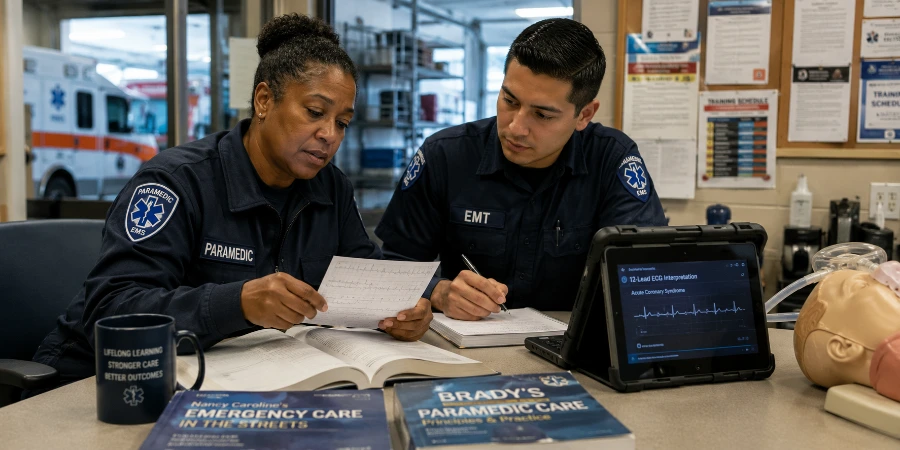
Busy EMS providers need a routine that survives shift work. A realistic plan can include one clinical topic per month, one documentation review per week, and one skills refresh every few shifts. The provider can use call types as prompts: a pediatric call triggers pediatric review, a refusal triggers documentation review, and a difficult respiratory call triggers airway study. Small, consistent review beats frantic studying near a deadline.
Partners can make the routine stronger. Crews can ask one practical question after a call, such as whether the first impression matched the final working impression. Instructors can model curiosity instead of pretending every answer should feel obvious. Students can build the same habit by writing down unfamiliar terms, asking focused questions, and reviewing weak areas before they become permanent blind spots.
The table below gives students and working providers a simple way to connect lifelong learning with everyday EMS responsibilities. It works best after the article explains a practical learning routine, because it turns that routine into specific study targets.
| Learning Area | Why It Matters | Practical Habit | Career Value |
|---|---|---|---|
| Recertification Planning | Keeps renewal work from becoming rushed deadline compliance. | Schedule refresher hours across the cycle instead of waiting. | Supports cleaner records and steadier professional readiness. |
| Protocol Updates | Clinical decisions change as standards and medical direction evolve. | Review one protocol change during each monthly study block. | Reduces reliance on outdated field habits. |
| Pediatric Readiness | Low-frequency pediatric calls can punish rusty sizing and assessment skills. | Practice pediatric equipment checks and age-based assessment prompts. | Builds calm performance during high-stress calls. |
| Documentation Quality | Reports must explain assessment, care decisions, and patient changes clearly. | Review one completed report weekly for missing reasoning. | Improves handoff quality and professional accountability. |
| Leadership Development | Leadership begins with communication, preparation, and crew reliability. | Ask one debrief question after complex calls. | Prepares providers for preceptor, instructor, and supervisor roles. |
Questions Students Ask About Lifelong Learning in EMS
Do EMTs and paramedics need continuing education after school?
Yes, continuing education remains part of EMS practice after initial training. Florida and national recertification systems both include continuing education or refresher expectations. The deeper point is professional readiness, not only compliance. Providers keep learning because patient care, documentation, protocols, and system expectations continue to change.
How can a new EMT keep learning without getting overwhelmed?
A new EMT should focus on one or two improvement targets at a time. Assessment flow, patient communication, documentation clarity, and equipment familiarity usually matter early. The provider can write down questions after shifts and review them during quieter time. Smaller learning cycles reduce overload and build confidence.
Does lifelong learning help with EMS promotions?
Lifelong learning can support promotion because it strengthens judgment, communication, and reliability. Supervisors often notice providers who prepare, accept feedback, and help others improve. Education alone does not guarantee advancement. The strongest candidates usually combine skill growth with accountability, teamwork, and consistent field behavior.
What should experienced providers study to stay current?
Experienced providers should study topics that match current responsibilities and recurring call risks. Protocol updates, pediatric care, airway management, documentation quality, emerging EMS roles, and leadership development all deserve attention. A provider preparing for instruction or supervision should also study coaching and team communication. Experience stays valuable when it keeps evolving.
The Provider Worth Becoming
The best EMS providers never stop being students because the work never stops testing them. Every new protocol, patient population, device, partner, and scene adds another chance to grow. The habit does not make a provider uncertain; it keeps confidence tied to preparation. For students entering EMS, that mindset may become one of the most important skills they carry into the field.

Jeromy VanderMeulen is a seasoned fire service leader with over two decades of experience in emergency response, training, and public safety management. He currently serves as Battalion Chief at the Lehigh Acres Fire Control & Rescue District and is CEO of the Ricky Rescue Training Academy, a premier provider of online and blended EMT and firefighter certification programs in Florida.
Jeromy holds multiple degrees from Edison State College and the Community College of the Air Force, and is pursuing his MBA at Barry University. He maintains top-tier certifications, including Fire Officer IV, Fire Instructor III, and Fire Inspector II, and has served as a subject matter expert for a court case. He is a member or the Florida Fire Chiefs Association.
Jeromy also contributes to state-level fire safety regulation and serves on several hiring and promotional boards.